January 14, 2016

4 Posts Back Home
Showing all posts made on the day January 14, 2016.

SGR must tackle Mombasa Road traffic chaos better

The standard gauge railway (SGR) is Kenya’s single-largest infrastructure investment since the British built the old Kenya-Uganda railway in the 1900s. More importantly, it is only a matter time before Kenyans begin paying for the piece of infrastructure costing billions of shillings. Indeed, the repayment schedule will most likely test the economy than ever before. The most acknowledged benefit of the new railway, whose first phase is set to be completed by June next year, is that it will cut travel time for passengers as the new locomotives will cover the 480 kilometres from Nairobi to Mombasa in half the 10 hours it currently takes. That will encourage travel to and from Mombasa and boost the economy considerably. Needless to add, the most benefits will accrue through quicker cargo turnaround. However, for the public to realise swift and lasting benefits from the new railway, besides getting buses and trucks off…
Africa-China exports fall by 40% after China slowdown

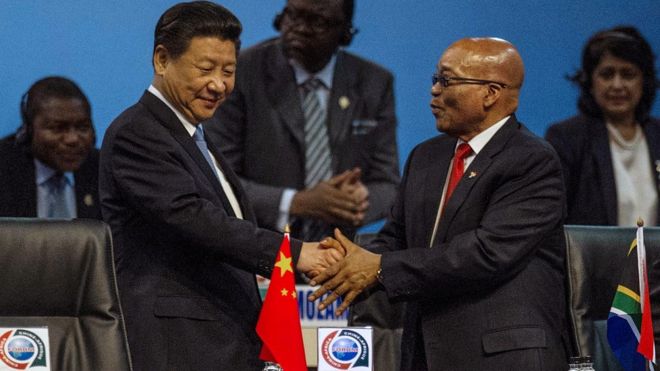
African exports to China fell by almost 40% in 2015, China’s customs office says. China is Africa’s biggest single trading partner and its demand for African commodities has fuelled the continent’s recent economic growth. The decline in exports reflects the recent slowdown in China’s economy. This has, in turn, put African economies under pressure and in part accounts for the falling value of many African currencies. Presenting China’s trade figures for last year, customs spokesman Huang Songping told journalists that African exports to China totalled $67bn (£46.3bn), which was 38% down on the figure for 2014. BBC Africa Business Report editor Matthew Davies says that as China’s economy heads for what many analysts say will be a hard landing, its need for African oil, metals and minerals has fallen rapidly, taking commodity prices lower. Chinese investment down There is also less money coming from China to Africa, with direct investment…

Asian stocks tumble after U.S. plunge

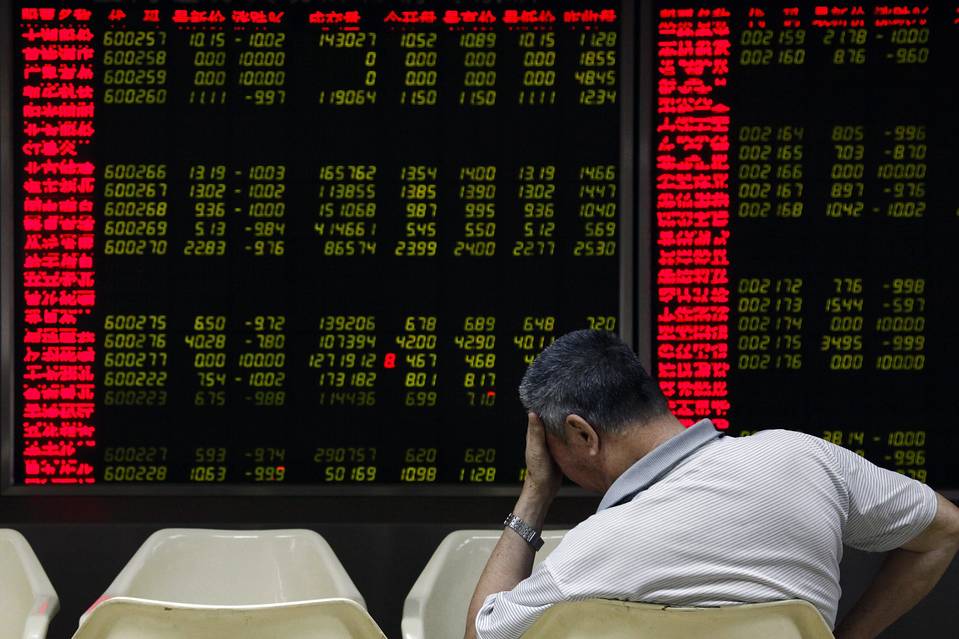
Asian stocks are following Wall Street’s drop. Japan’s Nikkei plummeted as much as 4% Thursday morning, while the Hang Seng in Hong Kong fell as much as 2.1%. The declines came after a rough day of trading in U.S. markets Wednesday that brought the Dow, S&P 500 and Nasdaq into correction territory, meaning they have tumbled 10% or more from their recent peaks. Experts say stocks are coming under pressure from slumping oil prices and uncertainty over China’s slowing economy and its weakening currency. Chinese stocks on Thursday flirted with the lows of last summer’s market crash, with the Shanghai Composite sinking as much as 2.8%. The index has lost around 18% since the start of this year. For years, China’s booming economy was a key engine for global growth, but now its slowdown is rippling out through global commodity markets. Oil prices fell under $30 a barrel Tuesday for…

Oil price briefly falls below $30 a barrel

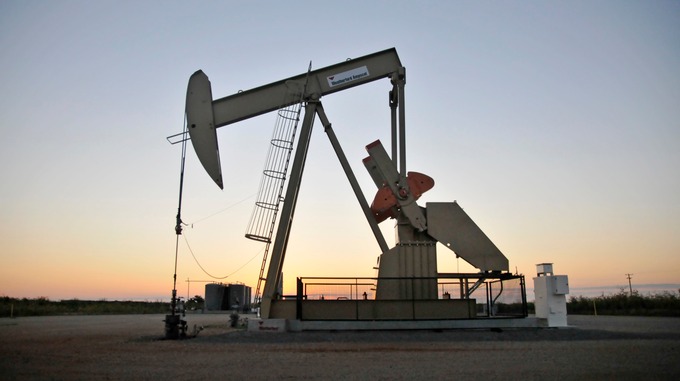
Oil prices have briefly fallen below $30 a barrel on international markets for the first time since April 2004, before recovering again. Brent crude, used as an international benchmark, fell as low as $29.96, but bounced back to trade at $30.22. Oil prices have fallen by 70% in the past 15 months. Earlier, Russia’s Prime Minister, Dmitry Medvedev, warned tumbling oil prices could force his country to revise its 2016 budget. He said that the country must be prepared for a “worst-case” economic scenario if the price continued to fall. Taxes from oil and gas generates about half the Russian government’s revenue. The 2016 federal budget that was approved in October was based on an oil price of $50 a barrel in 2016 – a figure President Vladimir Putin has since described as “unrealistic”. Government departments have been ordered to cut spending by 10%, repeating a policy imposed in 2015,…

Navigate