Magdalene Ougo

10 Posts Back Home
Content Writer

6 things you absolutely shouldn’t do when marketing your services via social media

Promoting your services on social media sites like Twitter and Facebook can be tricky. People don’t like the hard sell so if you push too hard you could lose followers quicker than you can gain them. To make best use of social media and to stop people unfollowing you take a look at this infographic from Salesforce which gives you 6 things to avoid and 5 things to do instead.

What is the Value of Your Social Media Assets and is it Worth Measuring?

Companies and brands have refined processes and systems for ascribing value to their physical assets and bricks and mortar properties but when it comes to the measuring of their online properties value there is mostly a big yawn. We live in a knowledge economy where information is vital and critical to ongoing success as we transition to a post industrial age where workers don’t carry bricks but laptops, iPads and iPhones. Increasing the value of your online assets which displays a brands knowledge and thought leadership to the world should be made a priority for any modern business. These assets are now not just restricted to online properties you own such as your website but anywhere you have a web presence and this includes your social media channels. What are Social Media Assets? Online assets are not just your website, it is any web presence that makes it easy for customers…

Google Scholar: Providing Academic Results

What is Google Scholar? Google Scholar is a search engine that provides academic results to its users, showing links to journal articles or theses on a selected topic. It’s free to access, and scans the text of academic literature available to it in order to provide the most relevant results according to the search terms chosen by the user. It aims to assess every piece of research the way a scholar would do, giving equal weighting to the content of the article, the author, and how many times it has been cited by other works. However, it has been said that it gives disproportionate importance to the citation count, and works that are already heavily cited will appear in the top results, thus accumulating even more citations. This leaves other articles at a disadvantage regardless of the quality of content or reputation of the author. Despite the imperfections of its…

10 Morning Rituals For A Better Day

What are your morning rituals? If you claim you don’t have any, think again. What do you do after you wake up each morning? Those are your rituals. The difference is that when you’re intentional about them, you can use the first hour of your day to improve the rest of it. Here are 10 ideas to start. This article originally appeared on Superhero You and is written by Sasha Graffagna. 1. Stop pressing snooze. We’ve all woken up a few minutes before the alarm goes off, only to bury our heads into our pillows to savor those final precious moments of sleep. Unfortunately, going back to bed means both lesser quality sleep and that you’ll feel more tired when you wake up again. Make a habit of never pressing snooze, perhaps by standing up and staying standing immediately after waking. Feeling brave? Buy an alarm clock without a snooze…

Social Media Hashtags: SEO Web Marketing

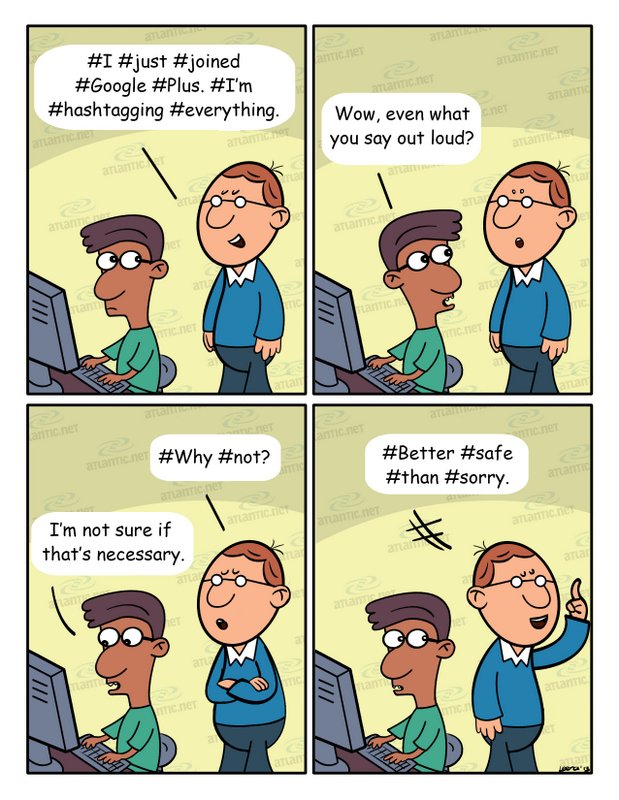
Social Media Hashtags Hashtags are everywhere nowadays. They help social mediausers track topics, categorise their updates, and even keep up to date with the latest developments in important news stories. They are a tool which helps connect users on platforms with millions of registered accounts. Hashtags come in the form of words prefixed with the symbol “#”. They were originally used on IRC to denote network wide topics, but since the rise of Twitter they have spread on theinternet and can now be found everywhere, including on websites which do not have the technical capacity for hashtag use. The introduction of the hashtag on Twitter was first suggested by open-source advocate Chris Messina in 2007, and its functionality and simplicity quickly ensured its popularity with the platform’s users. The first notable appearance of the hashtag was during the San Diego wildfires in October 2007, when Californian Nate Ritter used #sandiegofire in…

How to Design An Irresistible Facebook Page

11 million people use Facebook every 18 minutes… 7,246 new users are added to the social media mammoth every 15 minutes and 936 million active userslogin into the site on a daily basis. Do these Facebook facts make you wonder? “Am I missing out?” Even large businesses are gradually distancing themselves from traditional forms of advertising and are battling for new customers on social media sites.1 According to a recent study conducted by KA Social, 75% of the world’s population is on social media, and the other 25% of the population is both curious and excited to be on it. It’s easier, quicker and cheaper to put up a Facebook page with dynamic content compared to traditional and more expensive ways of promoting your brand. Your Facebook page is an extension or your primary website. It showcases your business philosophy. A well-designed page isn’t just about how it looks –…

Comparing the ROI of Content Marketing and Native Advertising

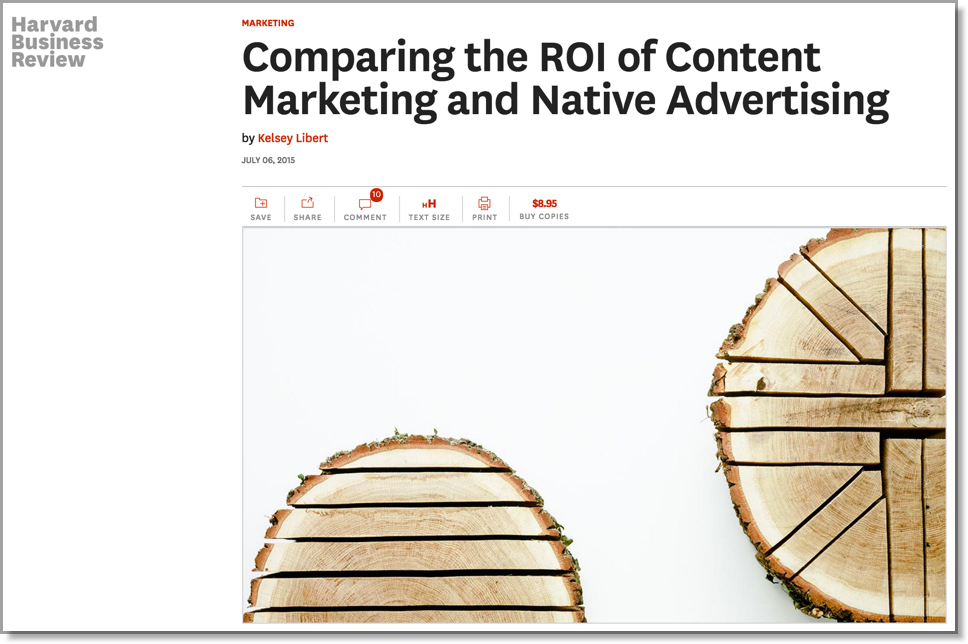
by  Kelsey Libert Many companies today rely on content marketing and native advertising to gain visibility for their brand — after all, 70% of people say they’d rather learn about products through content rather than through traditional advertising. But is either content marketing or native advertising a surefire way to boost brand awareness? And which one offers more bang for the buck? To answer this question, we at Fractl, a content marketing firm, collaborated with Moz to survey over 30 agencies specializing in content marketing about content formats and the metrics they use to track ROI. And I’ll get to what we found, below. But first, let’s remind ourselves how each approach is different, and what each approach aims to do. Content marketing agencies produce campaigns for brands (this is an example) and then pitch these to multiple top-tier publishers for coverage. Each time a publisher writes about a campaign,…

15 Social Media & Search Engine Marketing Trends in 2016

2015 was an exciting year in the world of search engine optimization and social media marketing. The two fields of social media and search are constantly evolving, with plenty of changes that prompt shifts in consumer and marketer behavior. In order to succeed, you should adapt to these changes and employ the latest and most effective strategies. The following are 15 social media and search engine marketing trends in 2016 and what you should do to stay ahead of the curve: 1. Mobile optimization is a must. Last year, mobile generated more traffic than desktop and laptop search. With virtually everyone using their smartphone or tablet to find information online, it goes without saying that business owners must cater to the needs of their mobile audience to generate leads and increase conversions. If your website still isn’t optimized for mobile, then you risk losing out to your competitors. This is…

How to Use Twitter’s Advanced Search Parameters to Uncover Relevant Mentions

This week, via Twitter’s Small Business Blog, a new post was released which provided an overview on how to use Twitter’s advanced search parameters to maxi Which is great – Twitters never all that good at communicating the inner workings of their system and how to use their tools effectively, so any information on this front is helpful. But the detail provided was a little too basic and didn’t go into the full depth of what’s possible through the platform’s advanced search features. So we decided to put together our own – a listing of how you can utilize Twitter’s search functions and qualifiers to make the most of the network’s stream of real-time conversation. And what’s more, we’ll also go over how to use those search parameters to set up constant monitoring to keep your brand on top of the latest news as it happens, via tweet. Twitter search basics By now, everyone pretty…

Retargeting Best Practices

The general consensus among marketers is that the average conversion rate for an ecommerce site is around 2-3%, meaning that most website visitors don’t become customers immediately. According to Digital Information World, 72% of online shoppers abandon their shopping carts before making a purchase, and only 8% of them return to complete their transactions. The best way to increase the number of purchases is through retargeting (also known as remarketing)—a form of online advertising that helps businesses recapture lost customers. Digital Information World has discovered that website visitors who are retargeted with display ads are 70% more likely to convert. If you don’t know how to drive conversions with retargeting, take a look at some of our best practices: 1. Refine your audience segments Start by segmenting your visitors based on the way they interact with your website. For instance, people who visit your shopping page are more ready…

Navigate