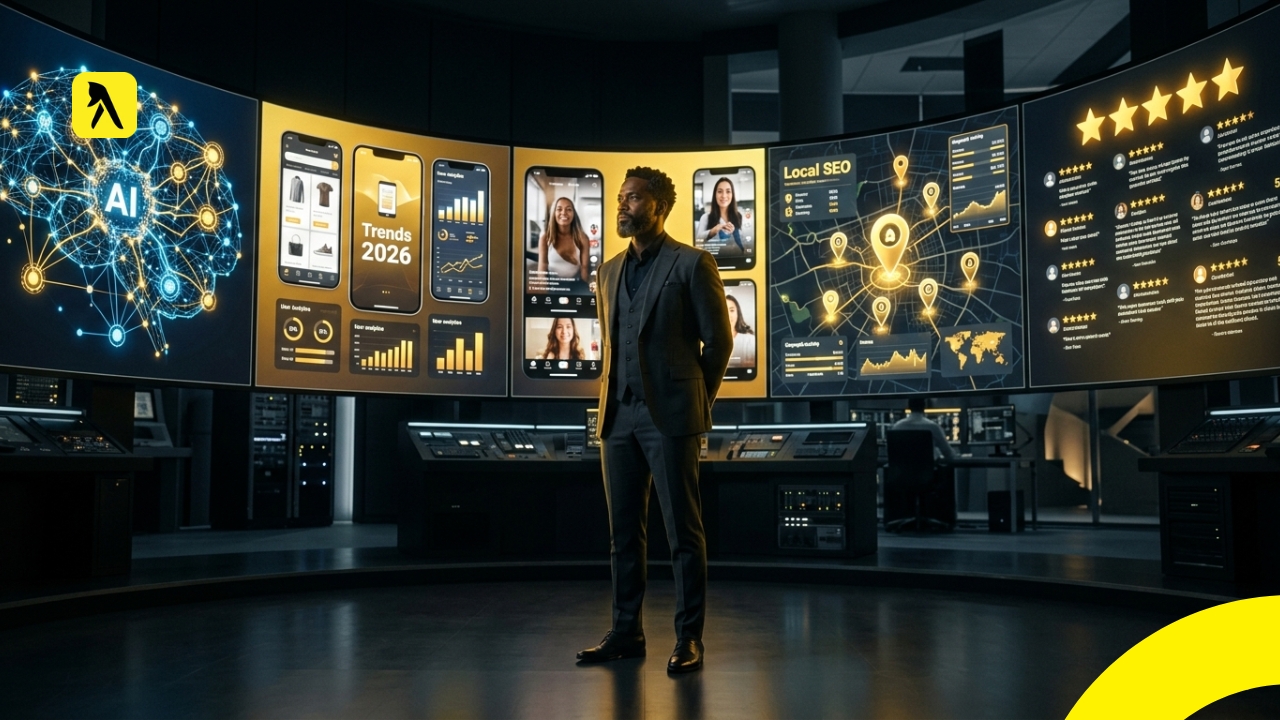
In an era where technology evolves faster than ever, digital marketing continues to reshape how brands connect with their audiences. Business owners who want to stay ahead must understand what’s emerging now—not what worked yesterday—because it consequently ensures your brand remains visible as the 2026 digital landscape shifts from traditional search to AI-driven discovery.
Furthermore, this year is the year digital marketing becomes more human-centric, data-driven, and future-ready since 2026 shoppers naturally crave authentic connections over generic, AI-generated “noise.”
From AI advancements to privacy‑first strategies, here are the top trending buiness shifts business owners cannot ignore in 2026.
1. AI‑Powered Marketing Becomes Mainstream
Artificial Intelligence (AI) isn’t new but in 2026, it’s becoming the engine behind almost every marketing function.
AI for Personalized Customer Experiences
Gone are generic email blasts. AI now enables:
- Real‑time personalization on websites
- Custom content recommendations
- Predictive buyer behavior models
These capabilities help brands deliver the right message to the right person at the right time.
AI in Content Creation
Marketing copy, social captions, and even blog posts are increaasingly getting drafted by AI tools. Rather than replace human creativity, AI accelerates production — letting marketers focus on strategy and voice.
AI Chatbots That Feel Human
2026 chatbots are sophisticated, conversational, and capable of handling complex queries — improving customer satisfaction while reducing support costs.
Why this matters:
AI boosts efficiency and effectiveness, giving small businesses the capabilities once reserved for enterprise brands.
2. Search Experience Optimization (SXO) Surpasses Traditional SEO
Search Engine Optimization (SEO) is being redefined. In 2026, Search Experience Optimization (SXO) is the priority.
What Is SXO?
SXO focuses on user experience (UX), not just keywords and rankings. It combines:
- Search intent understanding
- Page usability and design
- Engagement metrics like time on page
The Shift Toward Intent‑First Search
Modern search engines in 2026 prioritize content that balances user satisfaction with “machine readability” because it consequently allows AI-driven systems to synthesize and cite your brand with confidence.
Furthermore, this shift is essential to understand since traditional keyword stuffing naturally fails to meet the high standards of “Experience, Expertise, Authoritativeness, and Trustworthiness” (E-E-A-T) that now define search visibility.
Therefore, in the competitive 2026 Kenyan market, aligning your content with what searchers truly want is therefore the only way to move from a “link on a page” to becoming “the answer itself.”
Moreover, because 2026 search behavior is increasingly conversational, your content must be structured for extraction since AI overviews and voice assistants naturally favor concise, factual, and well-organized data over long, vague paragraphs.
- To thrive in this new search era, businesses must focus on:
- Answering Questions Directly: Because AI assistants prioritize “Answer-First” composition, starting your sections with a concise 40–60 word summary is consequently the best way to earn a citation; therefore, you naturally capture the 60% of users who now prefer “zero-click” answers.
- Keeping Users Engaged: Since modern algorithms track “Satisfaction Indicators” like dwell time and repeat visits, providing unique insights rather than generic summaries is therefore essential; furthermore, this human touch naturally resists being filtered out by AI-detection systems.
- Providing Structured Information: Because Schema markup acts as “subtitles for your content,” using JSON-LD is essential since it helps AI engines confidently link your page to bigger “Knowledge Graphs”; consequently, your brand is naturally recognized as an authority in its niche.
- Targeting “Fan-Out” Queries: Since AI systems break complex questions into smaller sub-queries, creating interconnected “Topic Clusters” is therefore essential; for example, if a user asks about “starting a business in Nairobi,” having specific guides on permits, locations, and banking naturally makes your site a more reliable source.
Rather than stuffing keywords, businesses must align content with what searchers truly want.
Examples of SXO best practices:
- Long‑form content with clear headings
- FAQ sections and schema markup
- Fast loading and mobile‑optimized pages
SXO doesn’t just boost rankings — it boosts conversions.
3. Video Continues to Dominate Digital Marketing
No trend is hotter than video.
Short‑Form Video Rules
Platforms like TikTok, Instagram Reels, and YouTube Shorts are where attention lives because they consequently align with the rapid-scrolling behavior of the 2026 Kenyan consumer.
Furthermore, short, snack-able videos are perfect for storytelling, product demos, and brand personality since they naturally lower the “commitment threshold” for viewers who are not yet ready for a long-form sales pitch.
Live Video Builds Trust
Live streams humanize brands. They let businesses:
- Answer questions in real time
- Launch products authentically
- Feature behind‑the‑scenes content
Interactive Videos Increase Engagement
Interactive elements like polls, clickable CTAs, and choose-your-path options keep audiences engaged longer because they consequently transform passive viewers into active participants in your brand’s story.
Furthermore, this shift is essential to adopt since 2026 consumers naturally ignore static content in favor of experiences that respond to their input. Therefore, incorporating interactivity is therefore a direct path to building a deeper connection with your Nairobi-based customers.
Pro Tip:
Repurpose long content into short clips — e.g., break a webinar into a series of bite‑sized videos.
4. Omnichannel Marketing Is No Longer Optional
Your audience isn’t in one single place, so your marketing shouldn’t be either.
What Is Omnichannel Marketing?
It means delivering a consistent message across all touchpoints:
- Websites
- Social media
- SMS
- In‑store experiences
- Messaging apps
Unified Customer Experience
Customers expect seamless transitions between channels because it consequently reduces the “cognitive load” required to complete a purchase in the fast-paced 2026 Kenyan market. Furthermore, this omnichannel flow is essential since a fragmented experience naturally creates doubt, leading to the “abandonment” we discussed earlier. Therefore, ensuring your messaging remains consistent from the first click to the final receipt is therefore a non-negotiable standard for modern brands.
Why seamless transitions are the backbone of 2026 conversion:
- Click an Ad → Matching Content: Because your landing page must fulfill the “promise” of your ad, ensuring identical headlines and visuals is consequently essential; therefore, you naturally lower your bounce rate by confirming to the user that they are in the right place.
- Desktop Cart → Mobile Follow-up: Since many Kenyans browse on office desktops but purchase via M-Pesa on their phones, sending a personalized WhatsApp or SMS reminder is therefore essential; consequently, you naturally bridge the device gap and capture the sale during their commute or evening downtime.
- Unified Customer Profiles: Because 2026 CRM tools can now link a Facebook “Like” to a website visit and an offline inquiry, having a single view of your customer is essential; furthermore, this naturally allows you to send a “Welcome Back” discount that feels helpful rather than intrusive.
- In-Platform Continuity: Since platforms like Instagram and Google now allow for “Partial Lead Forms,” starting a task on one app and finishing it on another is therefore essential; because you are meeting the customer where they are, you naturally increase your lead quality and volume.
When brands connect all channels, customers feel understood — not just marketed to.
5. Privacy‑First Advertising Strategies Are Critical
Data privacy regulations and consumer expectations have changed the game because they consequently move the power from the advertiser back to the individual.
Furthermore, third-party cookies are fading—not just because of technical phase-outs, but because 2026 Kenyan regulations like the Data Protection Act (DPA) now mandate explicit, auditable consent.
Therefore, “following” a customer across the web without their permission is therefore no longer just a technical challenge; it is a significant legal and reputational risk.
What’s Replacing Third‑Party Data?
- First‑party data (collected directly from customers)
- Consent‑based tracking
- Server‑side tagging
First‑party data isn’t just compliant — it’s more accurate and relevant.
Transparency Builds Trust
Consumers now expect clarity about:
- What data brands collect
- How it’s used
- How it’s protected
Brands that respect privacy build stronger loyalty.
6. Voice Search Optimization Gains Importance
Voice search continues rising thanks to smart speakers and mobile voice assistants because it consequently aligns with the hands-free, “on-the-go” lifestyle of the 2026 Kenyan consumer.
Furthermore, this trend is essential to watch since over 50% of mobile searches in Kenya now involve voice in some form, driven by the recent expansion of high-accuracy support for local languages like Swahili.
Optimizing for Voice Means:
- Targeting natural language phrases
- Using question‑based keywords
- Adding structured data markup
For example:
Instead of “best restaurants Nairobi,” voice search might be:
“What are the best restaurants near me right now?”
Voice search optimization doesn’t just boost rankings — it improves usability.
7. Social Commerce Changes the Buying Journey
The shopping experience is no longer limited to ecommerce sites—it lives on social platforms because it consequently collapses the entire marketing funnel into a single “scroll.” Furthermore, this shift is essential to embrace since more global shoppers are now purchasing directly via platforms like TikTok and Instagram in 2026.
What Is Social Commerce?
It’s selling directly on social platforms because it consequently allows you to meet your customers in their “natural habitat.” Furthermore, this shift is essential in 2026 as platforms like Instagram Shops, TikTok Shopping, and Facebook Marketplace have evolved into full-fledged digital storefronts.
Therefore, the traditional model of “click to website” is rapidly being replaced by in-app ecosystems. Moreover, because 2026 shoppers prioritize speed, social commerce is essential since people don’t want to click away—they want to discover and buy within the same app, often in as little as three taps. It’s selling directly on social platforms like:
- Instagram Shops
- TikTok Shopping
- Facebook Marketplace
People don’t want to click away — they want to discover and buy within the same app.
Benefits for Small Businesses
- Shortens buyer journey
- Reaches users where attention already exists
- Reduces friction
In 2026, social commerce is expected to grow faster than traditional online stores.
8. Influencer Partnerships Evolve
Influencer marketing remains powerful but with a twist.
Nano & Micro‑Influencers Deliver Big
Small audiences can mean higher trust and engagement.
Nano influencers (1K–10K followers) often:
- Have loyal audiences
- Deliver better conversion rates
- Are more affordable
Authenticity Over Follower Count
Brands now care less about huge numbers and more about real impact.
Long‑Term Collaborations Work Better
Instead of one‑off posts, ongoing partnerships build deeper audience trust.
9. Immersive Experiences Through AR and VR
Augmented Reality (AR) and Virtual Reality (VR) are no longer futuristic because they consequently provide practical solutions to the biggest hurdle in 2026 e-commerce: purchase hesitation.
Furthermore, these technologies are essential since they naturally bridge the “imagination gap” by letting Kenyan customers see products in their own space before they commit their hard-earned money.
Brands Use AR to Let Users Try Before They Buy:
- Try on glasses virtually
- Preview furniture in your room
- See makeup shades on your face
VR for Interactive Brand Storytelling
Virtual events, tours, and demonstrations create immersive experiences that capture attention longer because they consequently break the barrier between a digital screen and a physical product.
Furthermore, this shift is essential in the 2026 Kenyan market since high-value purchases—like real estate in Kilimani or high-end machinery—naturally require a level of trust that static photos simply cannot provide.
Therefore, moving from a gallery to a 3D walkthrough is therefore a strategic leap in customer engagement. Moreover, because AR and VR aren’t just “cool,” they are practical tools that improve conversion rates by reducing purchase hesitation since they naturally answer the customer’s silent question: “Will this actually fit my life?”
10. Sustainable & Purpose‑Driven Marketing Matters
Consumers today are values‑driven.
They Support Brands That:
- Demonstrate social responsibility
- Showcase environmental stewardship
- Share transparent impact stories
Purpose‑driven marketing isn’t just ethics — it’s a business advantage.
Younger audiences, in particular, reward brands that stand for something meaningful.
Putting It All Together: Success in 2026 and Beyond
If there’s one theme uniting all these trends, it’s this:
Marketing in 2026 is human first and technology second.
No matter how advanced your tools are, audiences want:
- Authenticity
- Relevance
- Value
- Respect for privacy
Action Steps for Business Owners Today
Here’s how to get started:
1. Audit Your Current Marketing
Identify strengths and gaps:
- Do you use first‑party data?
- Are your channels unified?
- Is your content optimized for SXO?
2. Invest in AI Tools
Not to replace creativity, but to augment your marketing output.
3. Plan for Video
Start with short‑form and live content.
4. Strengthen Your Social Commerce Strategy
Make discovery and purchase seamless.
5. Embrace Privacy by Design
Build trust through transparency and consent‑based targeting.
6. Track What Matters
Focus on conversions — not just vanity metrics.
In conclusion, keep in mind that digital marketing in 2026 is not simply about keeping up—it’s about leading the way because it consequently determines who stays visible in an AI-filtered world.
Furthermore, trends like AI personalization, Search Experience Optimization (SXO), social commerce, and privacy-first strategies aren’t passing fads; they are reshaping how businesses will succeed online since they naturally align with the higher expectations of the modern Kenyan consumer.
Therefore, waiting to adapt is therefore a strategy for obsolescence. Moreover, because every business, whether large or small, can benefit from understanding and applying these trends today, taking the first step is essential since it naturally turns your digital presence into a long-term competitive advantage.