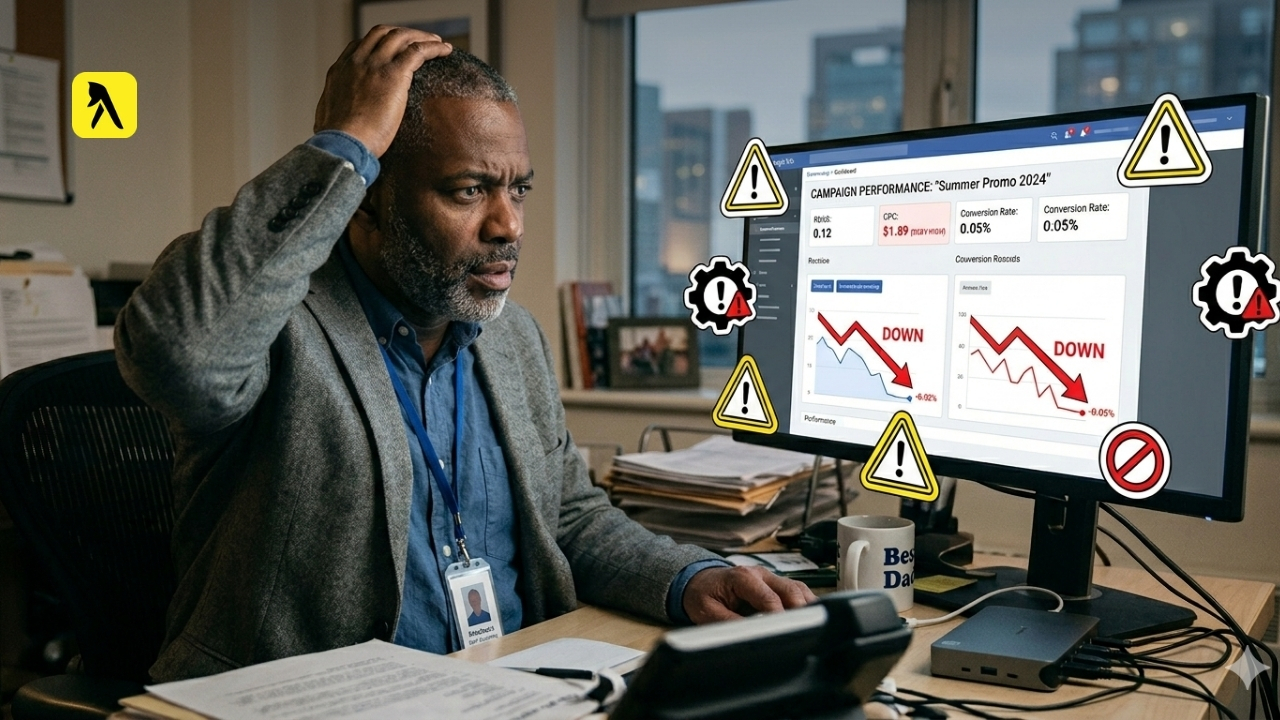
Running online ads has become a crucial part of business growth. Platforms like Facebook Ads and Google Ads allow businesses to reach their ideal customers, generate leads, and boost sales like never before. Yet, many businesses in Kenya and beyond are still losing money on ads because of simple, avoidable mistakes.
If you have ever spent money boosting posts or running Google campaigns without seeing results, you’re not alone.
This article highlights the top mistakes businesses make with Facebook and Google Ads, why they happen, and actionable tips to fix them for better results and higher return on investment (ROI).
1. Not Having Clear Goals Before Running Ads
One of the biggest mistakes businesses make with Facebook and Google Ads is launching campaigns without clear objectives because it consequently leads to wasted budget on clicks that don’t convert.
Are you trying to:
- Increase website traffic?
- Generate leads?
- Get WhatsApp inquiries?
- Boost brand awareness?
- Drive sales?
When you don’t define your goal, your ads lack direction.
Why This Is a Problem
Both Facebook (now under Meta Platforms) and Google use campaign objectives to optimize your ads. If you choose the wrong objective, the platform will show your ad to the wrong audience.
For example:
- Choosing “Engagement” when you want sales
- Choosing “Traffic” when you want conversions
How to Fix It
Before creating any ad:
- Define one clear goal.
- Choose the campaign objective that matches that goal.
- Measure success based on that objective.
2. Targeting Everyone Instead of a Specific Audience
Another common mistake is trying to reach “everyone.”
Business owners often think:
“The more people who see my ad, the better.”
That is not true.
Why Broad Targeting Fails
If you sell baby products, advertising to people aged 18–60 without narrowing down to parents wastes your budget.
With Facebook Ads targeting options, you can:
- Target by age
- Target by location
- Target by interests
- Target by behavior
- Create custom audiences
With Google Ads, you can:
- Target specific keywords
- Target specific search intent
- Target by demographics
- Use remarketing
How to Fix It
- Define your ideal customer profile.
- Narrow down your audience.
- Use custom and lookalike audiences.
- Test different audience segments.
Remember: A smaller, relevant audience performs better than a large, random one.
3. Boosting Posts Instead of Using Ads Manager
Many businesses rely only on the “Boost Post” button on Facebook because it consequently offers the quickest way to get a piece of content in front of an audience. Furthermore, while boosting is simple, it is very limited since it naturally lacks the deep customization and strategic control found in the full Meta Ads Manager.
Therefore, in the 2026 Kenyan digital market, relying solely on “Boost” is therefore a missed opportunity for higher returns.
Moreover, because the Meta algorithm prioritizes different actions based on your setup, using Ads Manager is essential since it allows you to target specific business outcomes rather than just gathering “vanity metrics” like likes or shares.
Why Boosting Is a Mistake
Boosting:
- Offers limited targeting
- Gives limited optimization options
- Does not allow advanced tracking
- Often leads to poor conversion results
Using Facebook Ads Manager gives you:
- Advanced targeting
- A/B testing
- Pixel tracking
- Conversion optimization
How to Fix It
Stop relying only on boosting because it consequently limits your ability to scale your business beyond simple likes and comments.
Furthermore, you should learn how to use Facebook Ads Manager properly since it naturally provides the sophisticated tools needed to reach specific, high-value Kenyan audiences in 2026. Therefore, making the switch is therefore an essential step for any entrepreneur who wants to see a real return on their digital investment.
4. Ignoring the Power of Keywords in Google Ads
When using Google Ads, keywords are everything.
Many businesses:
- Choose very broad keywords
- Ignore negative keywords
- Don’t research search intent
For example:
If you sell “office chairs in Nairobi” but bid on the keyword “chairs,” your ad may appear for people searching for dining chairs, plastic chairs, or even chair repair.
That means wasted money.
How to Fix It
- Use specific long-tail keywords (e.g., “ergonomic office chairs in Nairobi”).
- Add negative keywords.
- Use keyword research tools.
- Match your ad copy to search intent.
The more specific your keyword strategy, the better your results.
5. Poor Ad Copy and Weak Messaging
Even with perfect targeting, bad ad copy can ruin your campaign.
Common mistakes include:
- Being too vague
- Talking only about the company
- No clear call-to-action (CTA)
- Too much text
- No emotional appeal
Example of Weak Ad Copy
“We are the best digital marketing company. Contact us.”
This does not explain:
- The problem you solve
- The benefit to the customer
- Why they should act now
How to Fix It
Good ad copy should:
- Focus on the customer
- Address a problem
- Offer a solution
- Include a strong CTA
- Highlight benefits, not just features
For example:
“Struggling to get leads? Our digital marketing strategies help Kenyan businesses generate qualified leads in 30 days. Book a free consultation today.”
That is clear, benefit-driven, and action-oriented.
6. Not Installing Tracking Tools (Pixel & Conversion Tracking)
Running ads without tracking is like driving at night without headlights because it consequently leaves you blind to which turns are leading to your destination and which are leading to a dead end.
Furthermore, this lack of visibility is essential to avoid since 2026 digital marketing in Kenya naturally relies on data-driven decisions to stay profitable. Therefore, launching a campaign without a “Pixel” or “Conversion API” is therefore a recipe for wasting your budget on guesswork.
Many businesses:
- Don’t install the Facebook Pixel
- Don’t set up Google conversion tracking
- Don’t measure ROI properly
Without tracking, you cannot:
- See which ads are converting
- Retarget website visitors
- Optimize for sales
Why This Is Critical
Both Facebook and Google optimize ads based on data. If you don’t give them data, they cannot improve your performance.
How to Fix It
- Install the Facebook Pixel on your website.
- Set up Google Ads conversion tracking.
- Track purchases, form submissions, and calls.
- Monitor results weekly.
7. Sending Traffic to a Poor Landing Page
Many businesses spend money on ads but ignore where users land.
Common landing page mistakes:
- Slow website speed
- No clear call-to-action
- Too much information
- Not mobile-friendly
- No trust signals
If your landing page is weak, your ad performance will suffer.
Why Landing Pages Matter
Even the best Facebook or Google ad cannot fix a bad website because it consequently only solves the problem of “getting people to the door” without addressing what happens once they enter.
Furthermore, a high-quality ad naturally creates a high expectation; if your site fails to meet that standard, you therefore waste your marketing budget on clicks that will never convert. Therefore, in the 2026 Kenyan digital landscape, your website’s performance is therefore just as critical as your creative strategy.
How to Fix It
- Keep landing pages simple.
- Use one clear CTA.
- Make it mobile-friendly.
- Add testimonials.
- Ensure fast loading speed.
8. Not Testing Different Ads (No A/B Testing)
Another major mistake is running one ad and expecting perfect results because it consequently ignores the reality that your first guess is rarely your best. Furthermore, digital advertising is about testing since the 2026 Kenyan consumer’s preferences are naturally evolving; what worked in January might not resonate by December.
Therefore, treating your campaigns as a “science experiment” is therefore essential for long-term profitability. Moreover, because the Meta and Google algorithms require data to understand what works, continuous testing is essential since it naturally provides the feedback loop needed to lower your acquisition costs.
To find your winning formula, you should test:
- Different Headlines: Because a single word can change the emotional hook, testing a “Benefit-Driven” headline versus a “Fear of Missing Out (FOMO)” one consequently reveals what naturally grabs a Nairobi shopper’s attention; therefore, you stop guessing and start knowing.
- Different Images: Since humans process visuals faster than text, testing a “Product-Only” shot against a “Lifestyle” image (showing the product in use) is essential because it directly impacts your click-through rate; furthermore, this naturally helps you identify your most “scroll-stopping” content.
- Different Audiences: Because your product might appeal to “Young Professionals in Westlands” differently than “Small Business Owners in Eldoret,” testing these segments separately is therefore essential; consequently, you can allocate more budget to the group that naturally converts at a lower price.
- Different CTAs (Call to Action): Since “Shop Now” might feel too aggressive for some, testing softer options like “Learn More” or “Get the Offer” is essential because it matches the user’s current stage in the buying journey; therefore, you naturally reduce friction at the point of click.
Why Testing Is Important
What works for one business may not work for another because it consequently depends on your specific niche, target demographic, and brand voice.
Furthermore, what works this month may not work next month since the 2026 Kenyan digital landscape naturally shifts with seasonal trends, economic changes, and evolving platform algorithms. Therefore, a “set it and forget it” mentality is therefore a major risk to your marketing budget.
How to Fix It
Run multiple variations:
- Version A vs Version B
- Different creatives
- Different audience groups
Then analyze performance and scale the winning ad.
9. Giving Up Too Soon
Some businesses run ads for 3 days, see no sales, and stop.
Digital ads need:
- Time to optimize
- Data to learn
- Budget for testing
Both Facebook and Google have learning phases where the algorithm adjusts delivery.
How to Fix It
- Give your ads enough time.
- Allow data collection.
- Optimize based on performance.
- Avoid constant changes during the learning phase.
Patience and strategy bring better long-term results.
10. Focusing Only on Sales and Ignoring Brand Awareness
Focusing only on sales and ignoring brand awareness is a critical mistake because it consequently ignores the reality that most 2026 shoppers need multiple “touchpoints” before they trust a brand enough to buy.
Furthermore, this “buy now” pressure is essential to avoid since a cold audience in Kenya naturally feels hesitant when met with an aggressive sales pitch from a stranger. Therefore, building a “Top-of-Funnel” strategy is therefore essential for warming up your leads.
Moreover, because the Meta and Google algorithms favor accounts with high engagement, running awareness ads is essential since it naturally lowers your future conversion costs by building a massive, pre-qualified audience.
Why These “Non-Sales” Campaigns are Essential:
- Brand Awareness Campaigns: Because these ads focus on reach and recall, you consequently stay “top of mind” for your target customers; therefore, when they are finally ready to buy a product in your category, your brand naturally becomes their first choice.
- Video View Campaigns: Since 2026 consumers in Nairobi are obsessed with short-form video (Reels and TikTok style), these ads are essential because they allow you to tell your brand story cheaply; furthermore, you can consequently create “Custom Audiences” of people who watched 50% of your video to retarget them later with a sales offer.
- Engagement Campaigns: Because “social proof” (likes, comments, and shares) acts as a powerful trust signal, these campaigns are therefore essential for making your business look popular and reliable; consequently, a new visitor naturally feels more secure buying from a post that already has 100 positive comments.
- Lowering Long-Term Costs: Since it is much cheaper to show an ad to someone who has already seen your brand video, focusing on awareness is essential because it feeds your sales funnel with “warm” traffic; therefore, your overall Return on Ad Spend (ROAS) naturally improves over time.
Sometimes customers need to:
- See your brand
- Trust your brand
- Then buy
How to Fix It
Create a marketing funnel:
- Top of funnel: Awareness
- Middle of funnel: Engagement
- Bottom of funnel: Conversion
This strategy improves long-term profitability.
How to Succeed with Facebook and Google Ads
Running successful Facebook Ads and Google Ads is not about luck—it is about strategy because it consequently requires a deep understanding of how different platforms serve the Kenyan customer journey in 2026.
Furthermore, while Google Ads captures high-intent users actively searching for a solution, Facebook Ads naturally excels at creating demand through visual storytelling and interest-based targeting. Therefore, a “one-size-fits-all” approach is therefore a major strategic error.
To avoid wasting money:
- Set clear goals.
- Target the right audience.
- Use proper tracking.
- Write strong ad copy.
- Optimize landing pages.
- Test consistently.
- Be patient.
Businesses that treat digital advertising as a long-term investment see better results than those looking for instant miracles.
If you are serious about growing your business online, take time to learn how these platforms work; or work with a professional who understands digital advertising strategy.
Done correctly, Facebook and Google Ads can:
- Increase brand visibility
- Generate qualified leads
- Boost sales
- Scale your business
Avoid these common mistakes and apply the right strategy, because your ads can consequently move from being an expense to becoming a powerful revenue engine for your business.
Furthermore, this transition is essential since a well-oiled marketing machine naturally creates predictable growth rather than random spikes in traffic.
Therefore, in the 2026 Kenyan digital economy, mastering these fundamentals is therefore the difference between struggling for visibility and dominating your niche.